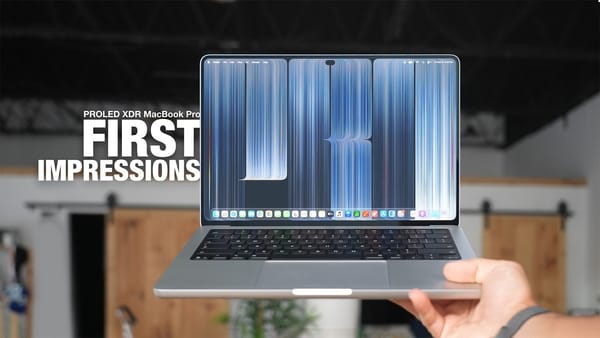
The fireworks make a better case for the OLED MacBook Pro than the benchmark scores do. Max Tech dims the lights. Two 16-inch MacBook Pros sit side by side, both with an M5 Max chip. On the mini-LED screen, each spark lights up a little of the sky around it. On the OLED, the gaps between sparks stay black.
| Refresh rate | 120 Hz on both screens |
|---|---|
| CPU stress test | Cinebench, same M5 Max configuration |
| Thermal check | Fan speed readings and a thermal camera |
The sparks are easy to spot in a dark room. Motion is worth checking in daylight, too, especially if you spend more time scrolling documents than watching HDR video.
Differences you can see with the lid open
- Moving text. Both panels run at 120 Hz. In the channel's slow-motion footage, the old display leaves a trail behind a moving UFO test pattern. Its outline stays sharper on the OLED. Look at letters moving up a web page and you can see what that difference means for reading.
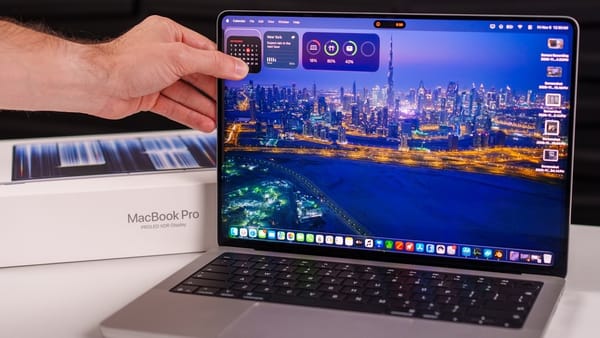
- Touch targets. A control that opens a small menu from the trackpad brings up a larger target when the reviewer reaches over and taps it. The panel wobbles a little under the finger. Max Tech likes the way the software responds but still reaches for the trackpad out of habit.
- Camera cutout. The Dynamic Island occupies the spot where the notch used to be. Notifications expand from it in the demo. Along the bottom of the display, the glass now runs to the rounded corner where the old model had a separate insert.
Max Tech removes the bottom panels and sets the machines next to each other. You can see where the redesign made room for parts that now sound quite different.
What changed under the bottom panel
- Battery packs. Max Tech counts four screws holding the new panel in place, down from eight. Inside, the packs take up less space even as their stated capacity inches up from 99.6 to 99.9 Wh. Some of the aluminum in the corners has been milled away.
- Speakers. There's room for a larger woofer. The channel hears more bass on the OLED machine, but prefers the way vocals come through on the older one. The same piece of music plays on both.
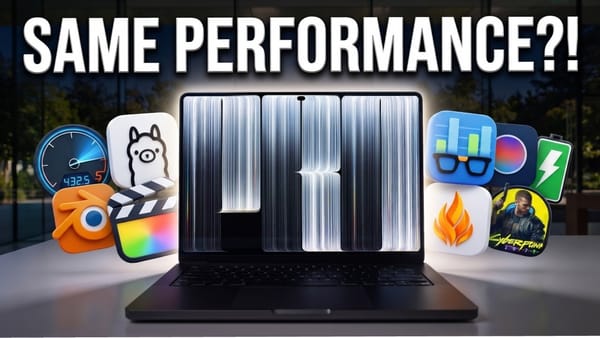
- Cooling. The thermal camera picks up a hot spot near the old display where the redesigned vents send exhaust down instead. The newer Mac runs cooler, though its fans kick in earlier and are easier to hear. Max Tech recorded Cinebench CPU scores of 9,165 for the OLED machine and 9,229 for the mini-LED one.
I'd keep the older M5 Max for long renders. The reason I'd switch is visible in a dark room with the sound turned off.