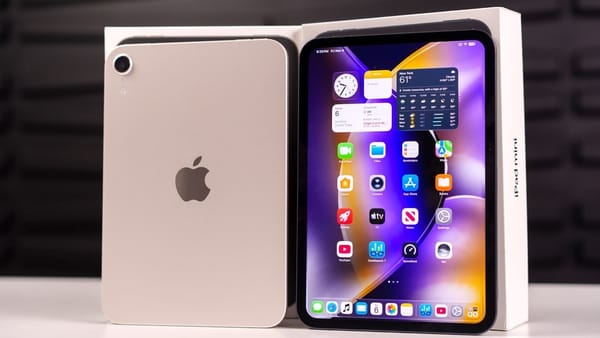
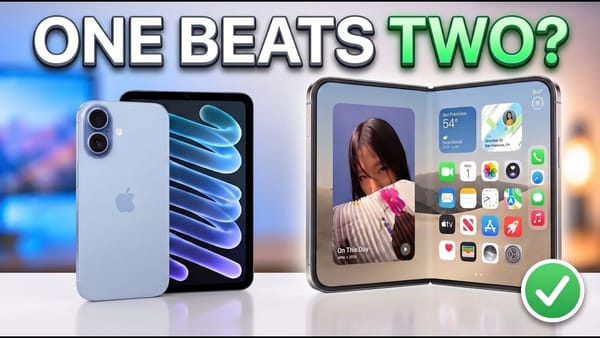
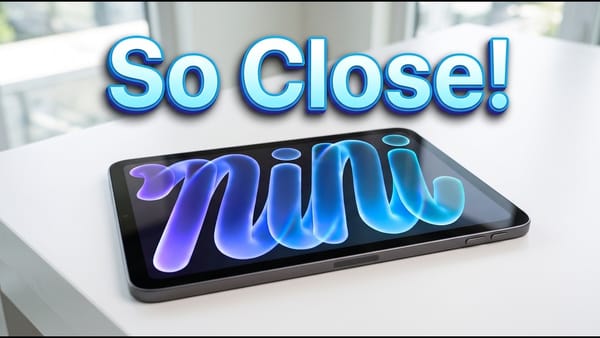
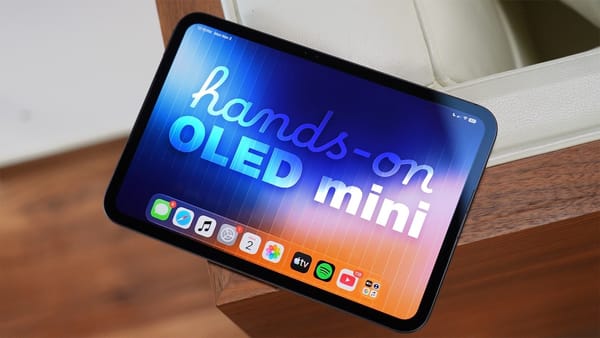
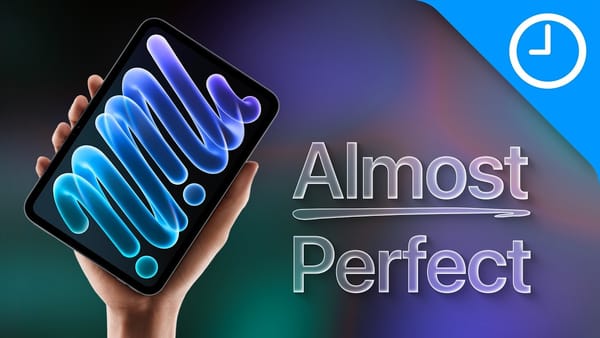
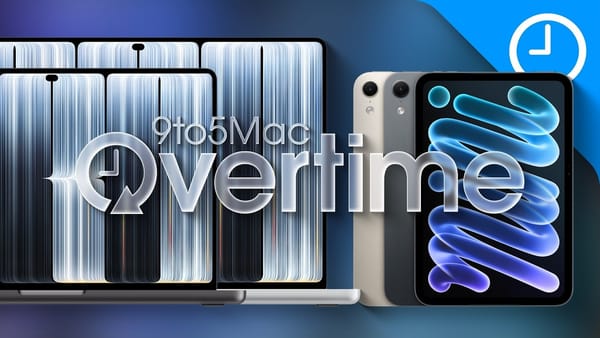
I wouldn't judge this iPad mini upgrade by refresh rate alone. Max Tech's comparison of iPad mini 8 and mini 7 finds that OLED makes movement look cleaner at the same 60 Hz, while the redesigned speakers give films another reason to stay on the smaller tablet.
What changes when you watch and hold it
- Motion clarity. In the side-by-side UFO test and slow-motion footage, Max Tech sees less LCD smearing on the OLED panel. That explains the impression of smoother animation without claiming the screen has become a 90 Hz or 120 Hz display.
- HDR and reflections. The video shows brighter highlights against black backgrounds and judges reflections less distracting. Apple's specifications list 600 nits SDR and a 1,200-nit HDR peak, which describes the panel's different brightness modes rather than a constant output.
- Speaker separation. Max Tech hears clearer vocals and less overlap between frequencies. The video credits the hidden grilles and under-display woofers, with bass that can also be felt through the tablet.
- One-handed comfort. The thinner body and narrower bezels are immediately noticeable in the unboxing. For iPhoners who read or watch while holding the mini, that physical change sits alongside image quality.
The video also moves beyond the display. Max Tech tests the base configuration, so its results shouldn't be treated as measurements of every storage option.
What changes when you work or play
- Video calls. Moving the front camera to the long edge puts the caller nearer the center when the mini is held horizontally. Max Tech also compares microphone recordings; the rear camera, the video says, is unchanged.
- CPU workloads. The Geekbench 7 results are 4,034 versus 2,699 in single-core and 10,494 versus 7,274 in multi-core, according to Max Tech. Those are benchmark results, rather than a promise that each app opens proportionally faster.
- Graphics. Steel Nomad Light averages 26.3 fps against 10.1 fps in the video's test. The extra GPU headroom can help demanding games approach the panel's limit, though the display still can't show 120 distinct frames per second.
- Local AI. Max Tech reports more memory available to language models and over twice the token rate on its small Qwen test. That result belongs to the demonstrated workload; it doesn't establish the same gain for every model.
I'd separate clearer 60 Hz motion from a requirement for 120 Hz gaming before choosing a mini.