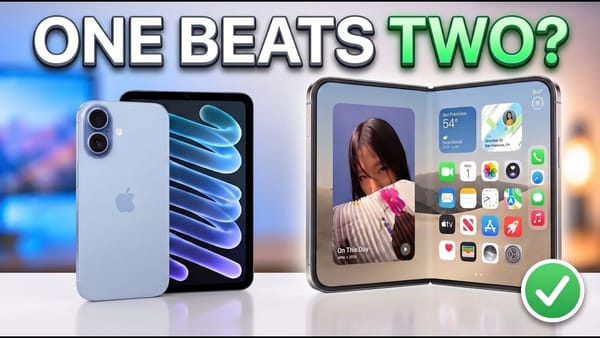
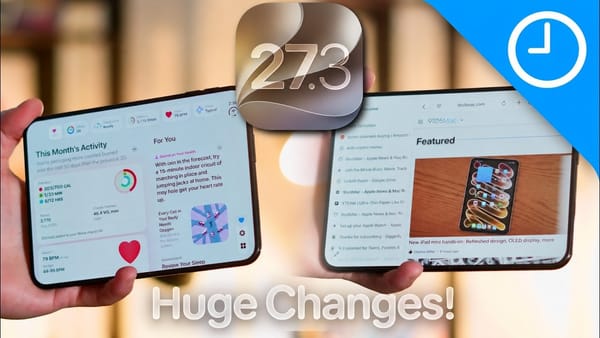
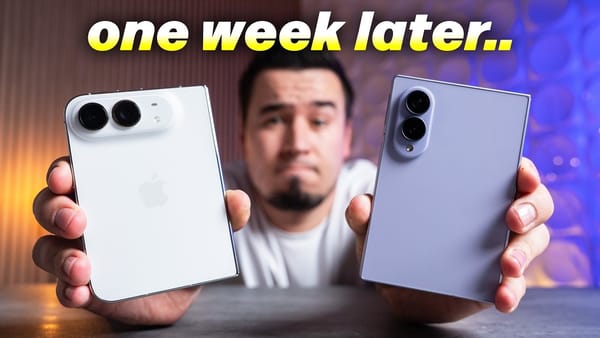
Two weeks with the iPhone Duo changed Max Tech's view. The channel is leaning toward a switch because the inner display gives phone tasks more room without carrying a second device. The review touches gaming, multitasking, battery, one-handed use, rear-camera selfies, and the smaller cover screen. For iPhoners, the day-to-day question is how often the Duo needs to open.
Where the larger screen helps
- Multitasking. The Duo's 7.6-inch inner display gives two apps room to share a screen. The review treats that as a practical gain for work that otherwise requires jumping between apps. This is also where the shape of the display matters: two active panels can stay visible while a conventional iPhone requires one to move into the background.
- Gaming. Opening the device creates a larger play area, while the folded phone stays available for a quick session.
- Apple Pencil. Max Tech includes stylus support among its reasons to consider the Duo. At launch, Apple described USB-C Apple Pencil support as a future feature, so that part of the buying case depends on a software update.
What still needs a tradeoff
- Cover display. The review checks whether the narrower outer screen works for one-handed use. That's the surface owners will touch most when a task doesn't need the fold.
- Battery. Screen choice affects endurance, and the video considers battery life after two weeks rather than relying on a launch specification. The review frames it as part of the switch decision because more time on the inner panel means a different daily pattern from quick checks on the cover.
- Cameras. Folding the Duo makes rear-camera selfies possible, though the review's camera chapter is a reminder to compare the full camera system with a conventional Pro phone. That trick helps with framing a self-portrait; it doesn't settle whether the other lenses cover the shots you take most often.
- Touch ID. The side-button sensor changes the familiar Face ID routine, especially when unlocking the phone folded.
A two-week switch decision is more persuasive than a launch-day reaction, but Max Tech's conclusion still depends on the tasks in its own routine. I'd try typing on the cover display and moving two apps around the inner screen before drawing the same conclusion. The review's switch makes sense for that routine, but a phone that mostly stays folded asks for a different verdict.