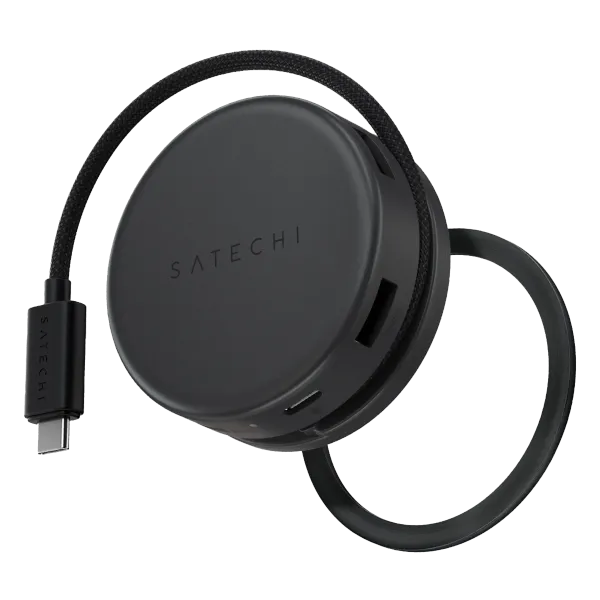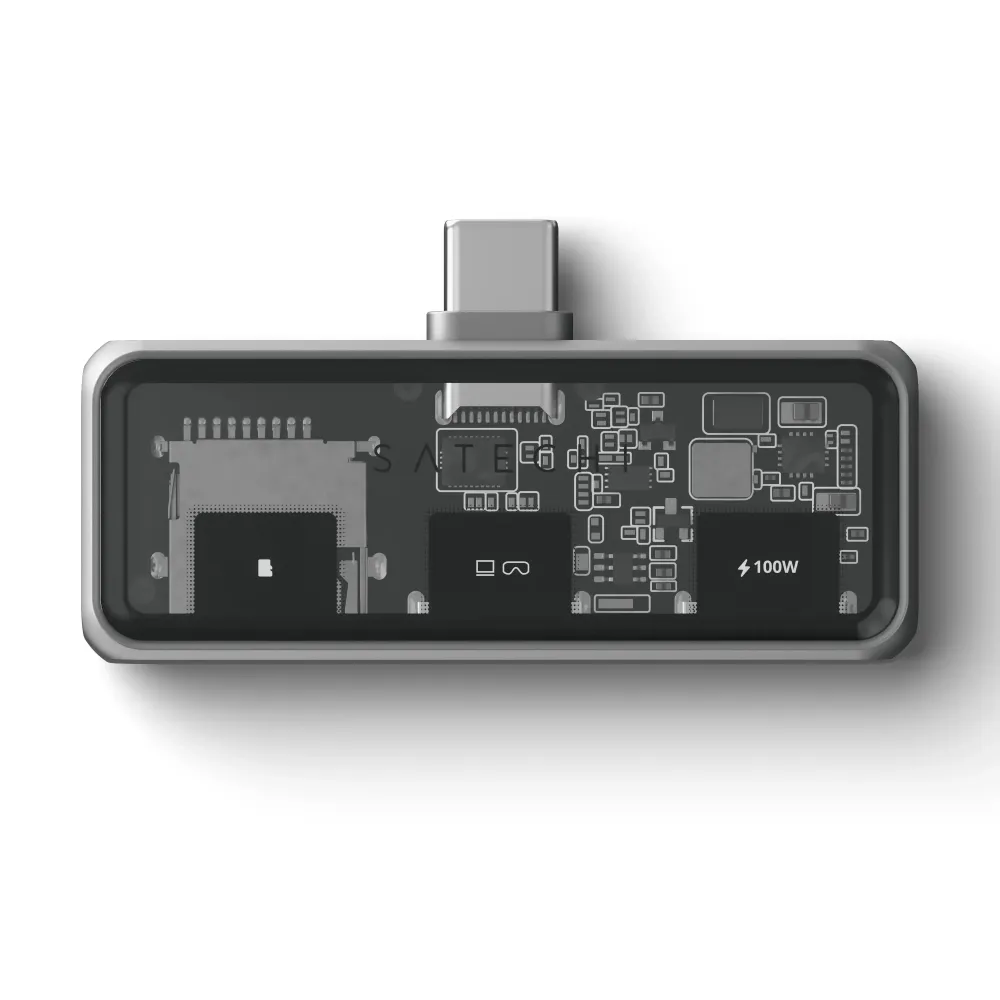
Plug Xreal or Viture glasses straight into an iPhone and they run the screen while draining the battery that powers it. The Mobile XR Hub with microSD is Satechi's 16-gram fix: a USB-C splitter that sends DisplayPort video to the glasses at up to 4K60 while a second port passes through up to 100W of charging, with a microSD reader riding along. There's no cable to manage, since the male USB-C plug is fixed to the back and the whole bar hangs off the phone's port, its circuit board visible under a tempered-glass window.
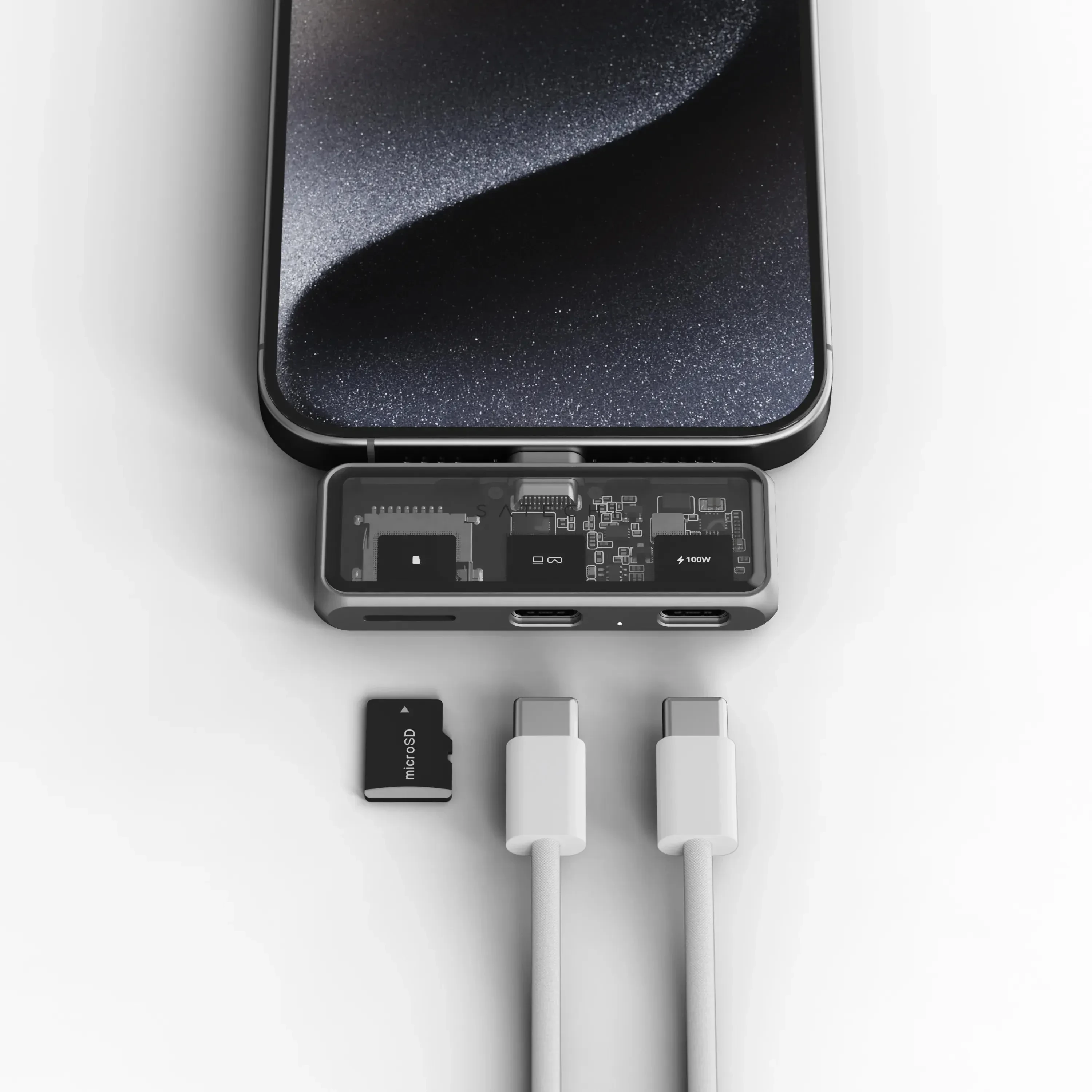
Compatibility is the whole story here. The glasses list covers Viture, Xreal, Rokid, RayNeo, and TCL NXTWEAR S, with one named exception: Satechi says the Xreal One draws more power than the hub can feed it. On the phone side it takes any USB-C iPhone, meaning iPhone 15 and later, plus iPads, Macs, a Switch, or a Steam Deck. Lightning iPhones are out.
Key specs
| Video out | USB-C DP 1.4, up to 4K at 60Hz |
|---|---|
| Charging | Up to 100W passthrough PD |
| microSD | UHS-I, up to 33MB/s, card not included |
| Size | 2.42 x 0.93 x 0.35 in, 0.57 oz |
Read the speeds closely. The data side of the video port moves files at USB 3.0's 10Gbps, and Satechi's own charging runs put an iPhone 16 Pro at 50 percent in 25 minutes through the hub. The card reader is the slow lane: UHS-I caps it at 33MB/s, a speed for playing files off the card, not offloading a night of ProRes. Satechi launched the hub in November 2024 next to an Audio version that swaps the card slot for a 3.5mm headphone jack.
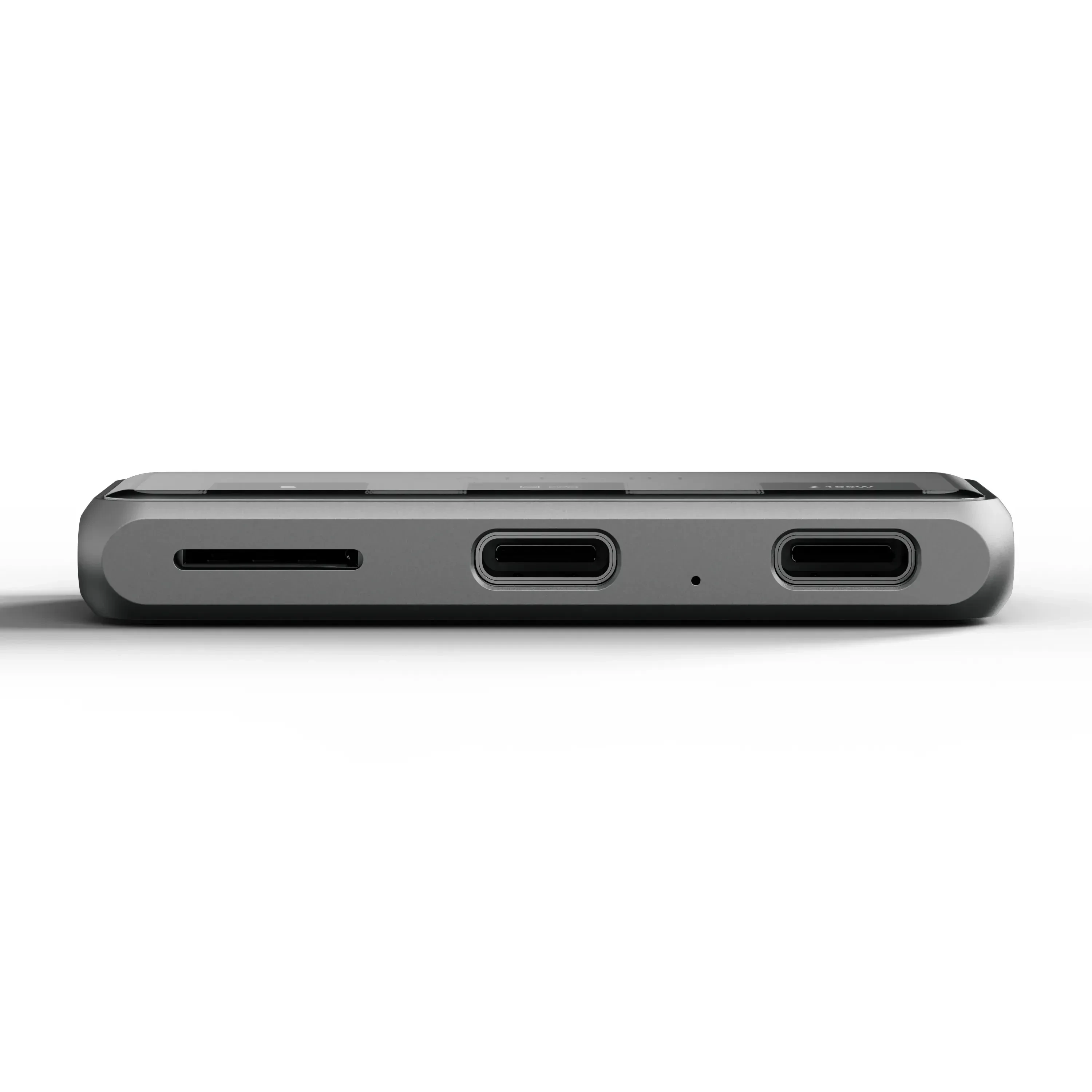
Fits iPhoners who bought display glasses before a battery bank: one dongle keeps the phone fed through a long-haul movie.
Satechi's compatibility list starts at the iPhone 15 because the glasses need a port that carries video, something Lightning never offered. The glasses waited for the port; the hub makes the port enough.