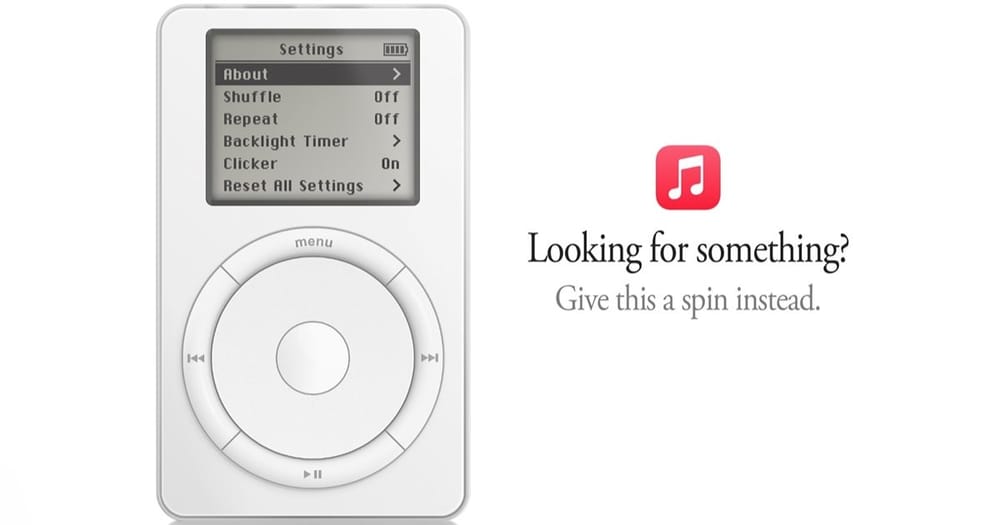
Type a music.apple.com address that doesn't exist and Apple hands you an iPod. The Page Not Found screen now reads "Give this a spin instead." over a working copy of the first iPod, 25 years to the day after Steve Jobs introduced it on October 23, 2001.
Poke through it and the About screen counts 1,029 songs from 682 artists, a nod to the original pitch of 1,000 songs in your pocket. They're spread across 15 playlists: five 2001 hit lists by genre, nine 2000s Essentials collections, and one called Songs From iPod Ads. That one opens on Take California by Propellerheads, the song from the first iPod commercial, and runs 22 tracks through Daft Punk's Technologic, Gorillaz's Feel Good Inc, U2's Vertigo, Feist's 1234, and Coldplay's Viva la Vida. Tracks play as 90-second previews.
The details are right. The main menu is Playlists, Artists, Songs, and Settings in a Chicago-style typeface, and the wheel carries Menu, back, forward, and play/pause around a center button, the 2001 layout. Settings has Shuffle, Repeat, a Backlight Timer that runs from Off to Always On, a Clicker switch, and Reset All Settings. About claims 9.2 GB of capacity with 4.5 GB free, more storage than the real thing had.
Brick made the trip too, complete with its Press Center to Launch screen, a ball count, and a score. It hides where the original hid it: Settings, then About, then hold the center button.
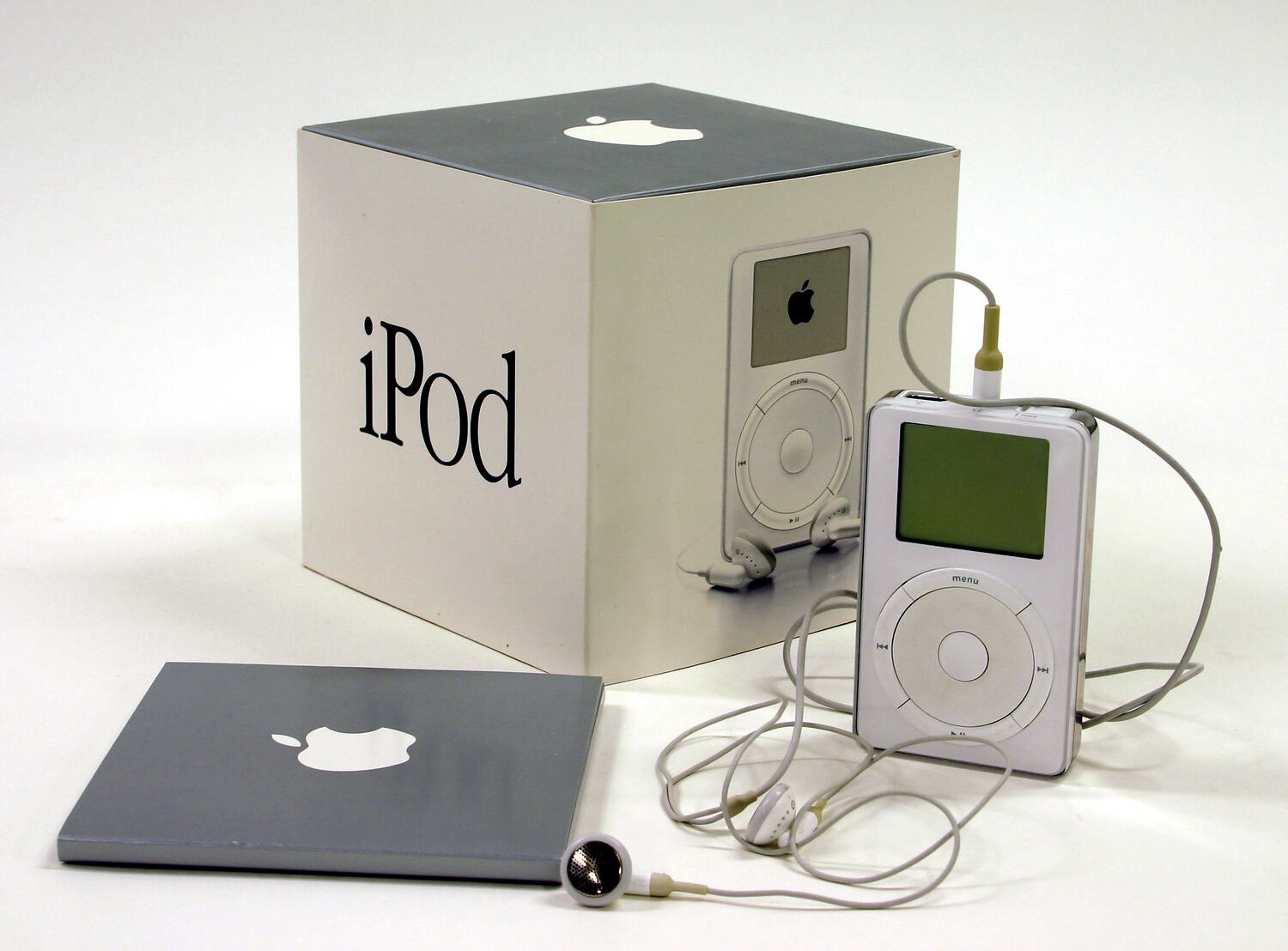
The 2001 iPod weighed 6.5 ounces, stored music on a 5 GB hard drive, and used FireWire, which Apple said could copy a whole CD in under 10 seconds. It worked only with Macs and shipped on November 10. The click wheel arrived three years later, the classic name in 2007, and Apple retired the line in May 2022 when it discontinued the iPod touch.
No new hardware, no event, just a toy behind a 404. I'd take that over a nostalgia reissue. The iPhone already does everything the iPod did, and a birthday hidden behind an error page is a better joke than any reissue would be.
Any broken Apple Music web address opens it, music.apple.com/ipod25 included, and the layout shrinks to fit a phone screen, so iPhoners can give it a spin without a Mac nearby.